Colorado Irrigation Water Supply Outlook — A Difficult 2026
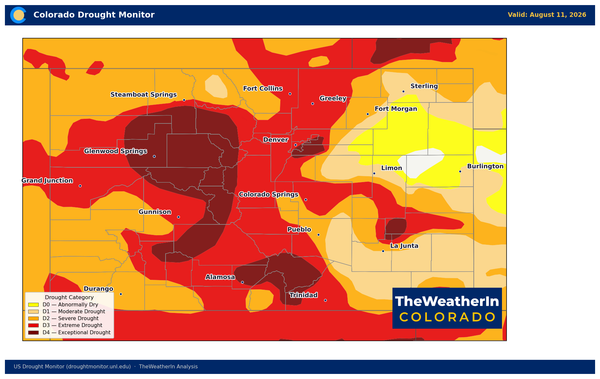
A historically poor mountain snowpack, combined with above-normal spring temperatures, points to an early, rapid runoff season and tighter water supplies for Colorado irrigators.


Based on NOHRSC season-to-date snowfall analysis and April 2026 seasonal forecast.
Snowpack: The Foundation of Colorado's Water
More than 70% of Colorado's surface water supply originates as mountain snowpack. This season, that reservoir is dramatically depleted. As of mid-April 2026, most of the state's core mountain ranges are running at 40–55% of their
normal season-to-date snowfall:
- Elk Mountains / Crested Butte: 49% of normal (−92 inches)
- Sawatch Range / Leadville: 38% of normal (−78 inches)
- Gore Range / Vail: 55% of normal (−73 inches)
- Steamboat / Flat Tops: 45% of normal (−89 inches)
- San Juans / Silverton: 48% of normal (−116 inches)
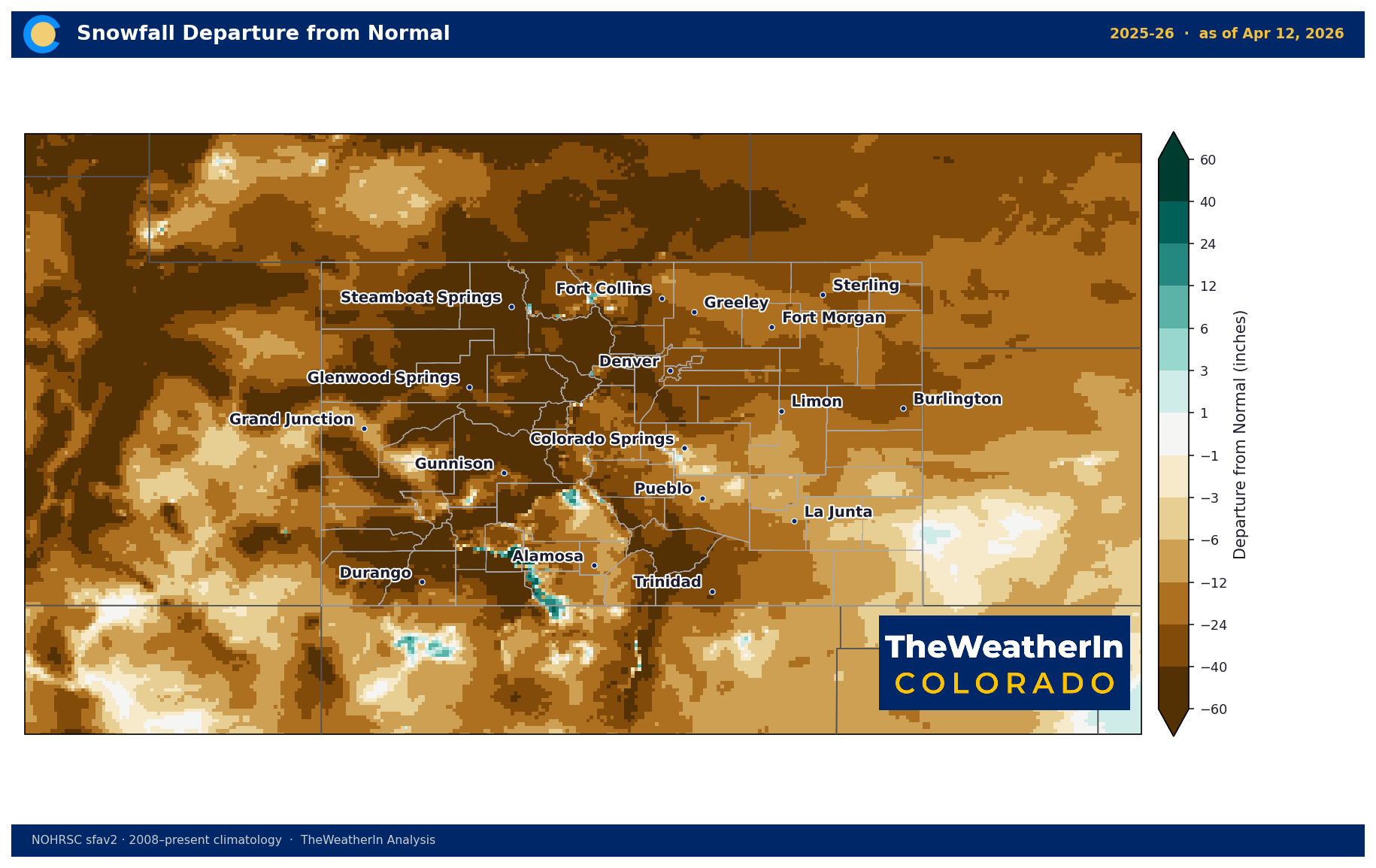
The exception is Wolf Creek Pass and the southwestern San Juans, which finished near normal. Everything else is well short.
What Reduced Snowpack Means for Irrigators
Runoff timing will be early. With above-normal temperatures forecast through at least June, snowmelt is already accelerating. Peak streamflows on most Colorado rivers are likely to arrive 2–4 weeks ahead of the historical average. Water that runs off in April and May is often less usable for summer irrigation than water that melts gradually through June and July.
Total runoff volume will be below normal. Less snow = less water. How much less depends on late-season precipitation, but absent a significant wet spring, most Colorado river basins will see below-normal annual runoff.
Water rights and call dates. In a low-water year, senior water rights calls come earlier. Junior rights holders — particularly those on smaller tributaries — should monitor call activity closely as we move into May and June.
Precipitation Outlook
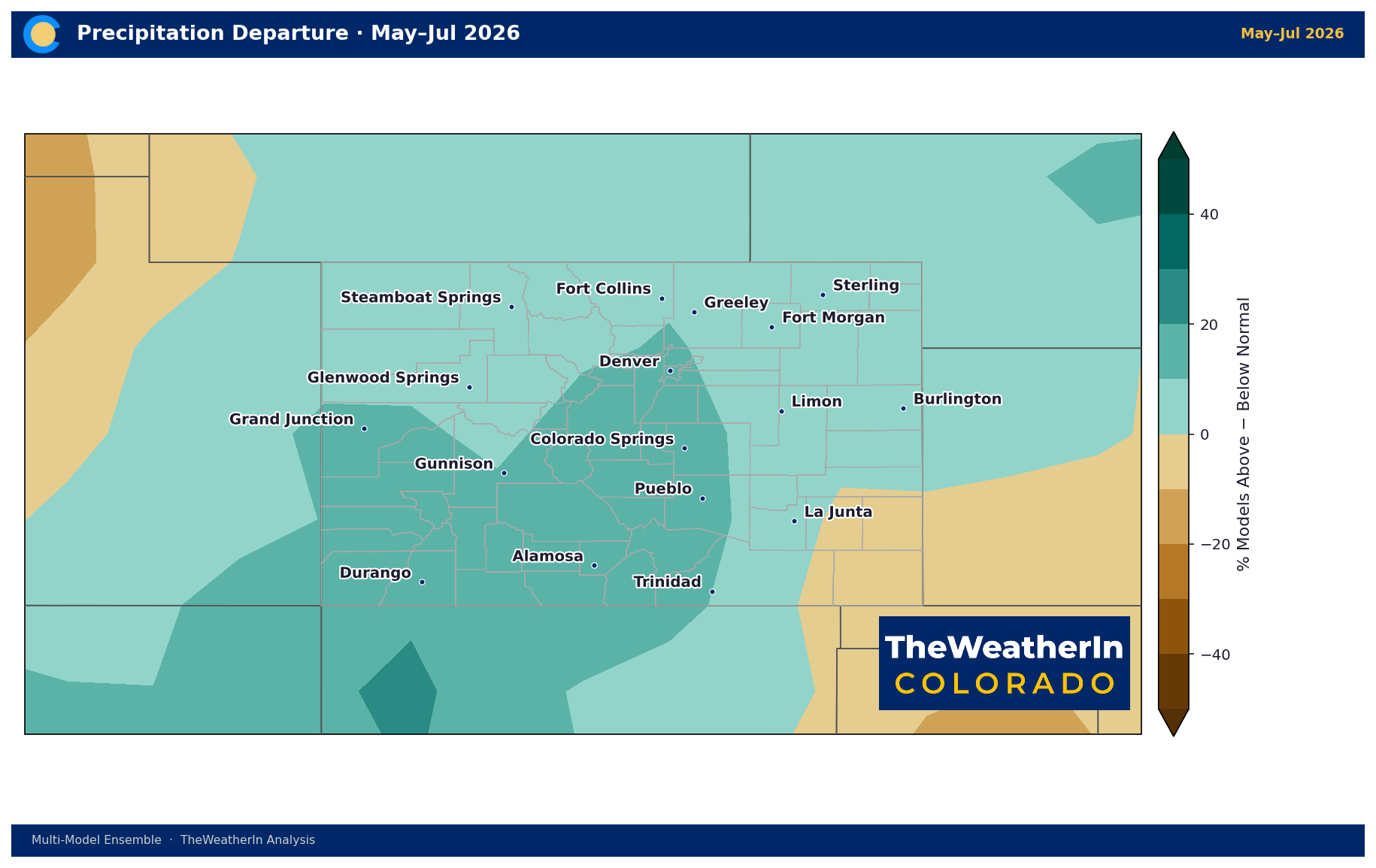
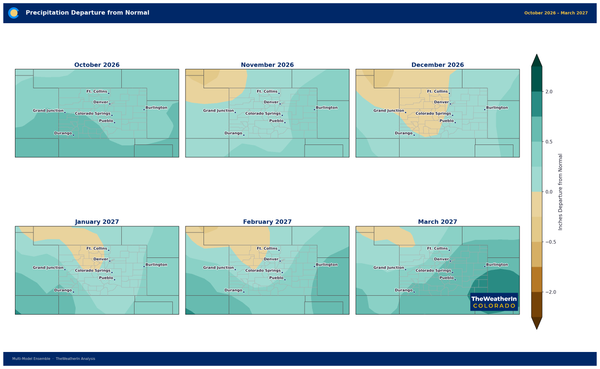
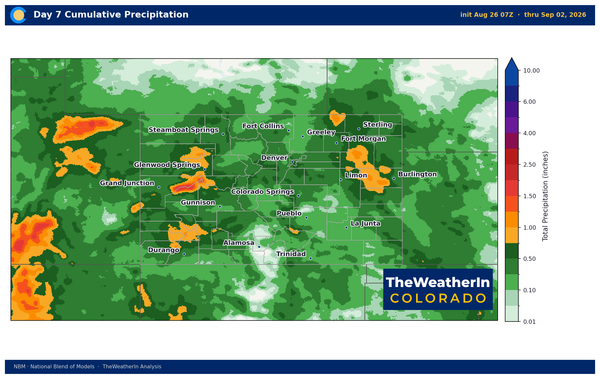
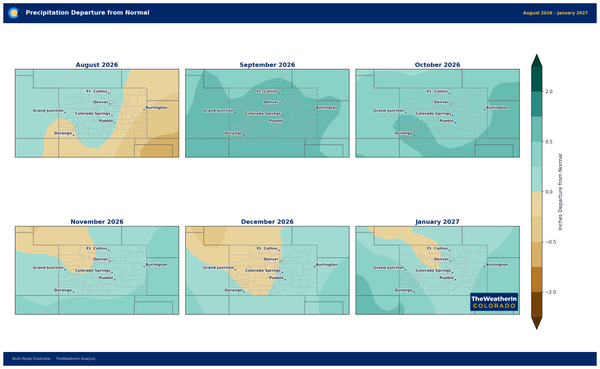
The May–July outlook shows a modest wet lean for the mountains and central Colorado. If this signal verifies, late spring precipitation could partially offset the snowpack deficit. However, rain is a poor substitute for snowpack —
it runs off quickly rather than being stored for gradual summer release.
The June–August outlook shows a wet lean for the mountains consistent with an active early monsoon. A strong 2026 monsoon would help fill reservoirs and reduce late-season irrigation stress, but this signal is at the low end of
seasonal forecast confidence.
Bottom Line
Plan for a tighter water year. Early runoff, below-normal total volume, and warm temperatures increasing ET demand create a challenging combination. Irrigators dependent on direct streamflow diversions should expect earlier-than-normal shortfalls on junior rights. Reservoir-dependent operations have more buffer — monitor storage levels through May.