Colorado Ski Season 2025–26: A Tale of Two Ranges
The 2025–26 ski season will be remembered for a historic snowfall deficit across most of Colorado's mountains — but Wolf Creek and the southwestern ranges told a very different story.


Data: NOHRSC National Snowfall Analysis, 2008–2026 period of record.
The Numbers
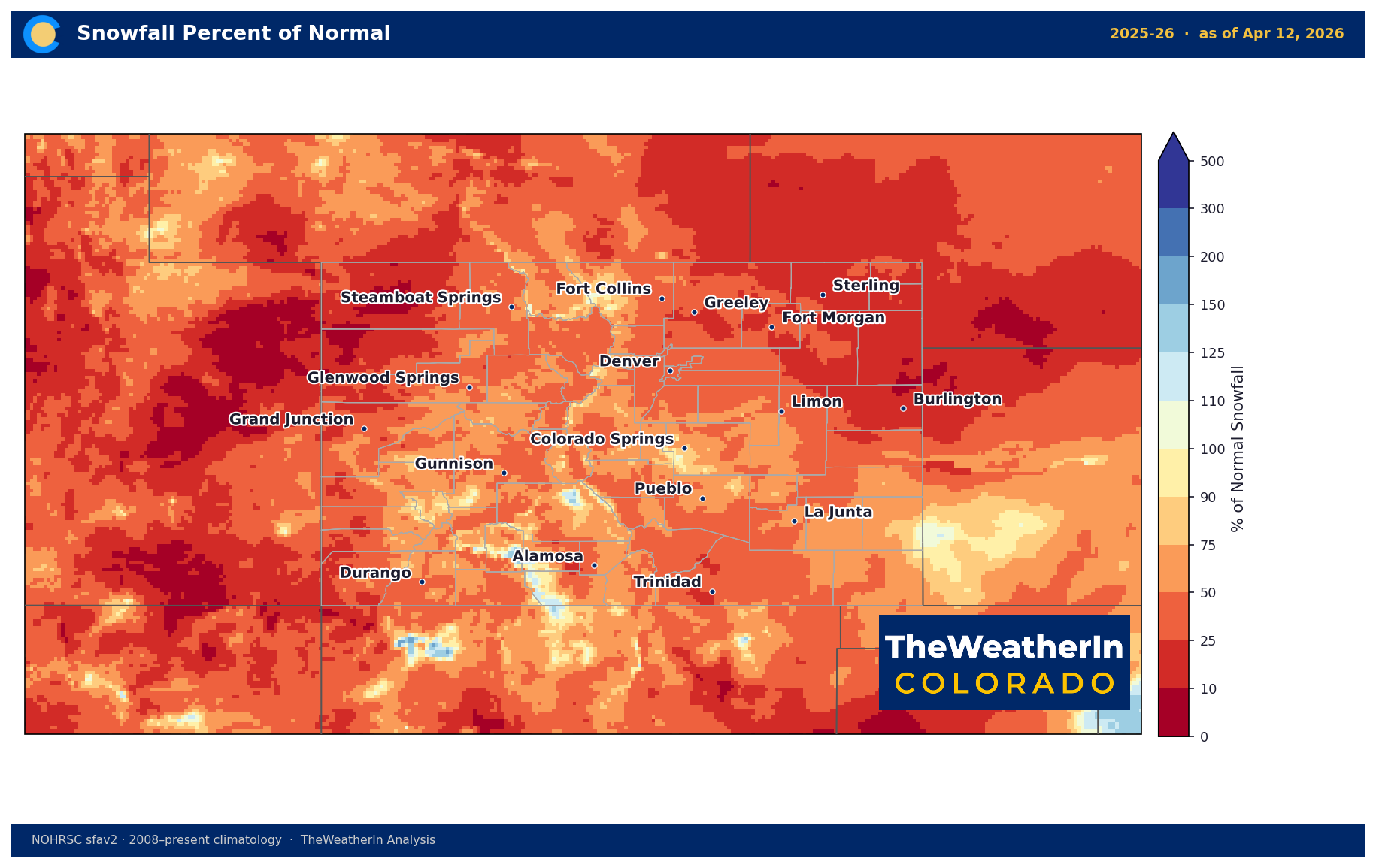
Colorado's ski resorts closed out the 2025–26 season with snowfall totals that, while not catastrophic in absolute terms, fell dramatically short of what these mountains typically see (totals reported via NOHRSC, not by the listed resort):
Resort Area │ Season Total │ % of Normal │
Crested Butte │ 89" │ 49% │
Steamboat │ 72" │ 45% │
Vail │ 91" │ 55% │
Aspen │ 73" │ 53% │
Telluride │ 114" │ 66% │
Silverton │ 106" │ 48% │
Wolf Creek │ 207" │ 102% │
The Exception: Wolf Creek
While most of Colorado's ski terrain struggled, Wolf Creek Pass in the southern San Juans had a nearly textbook normal season — finishing at 207 inches and 102% of normal. Wolf Creek's position in the path of persistent southwest
moisture flow gave it access to systems that bypassed much of the rest of the state. It was the one consistent winner all season.
What Made This Season Lean
The 2025–26 season was characterized by persistent ridging over the western United States that kept the main storm track north and east of Colorado. Systems that did reach the state often came out of the northwest — cold but
relatively dry — rather than the moisture-rich southwest flow that typically delivers Colorado's biggest snowfalls.
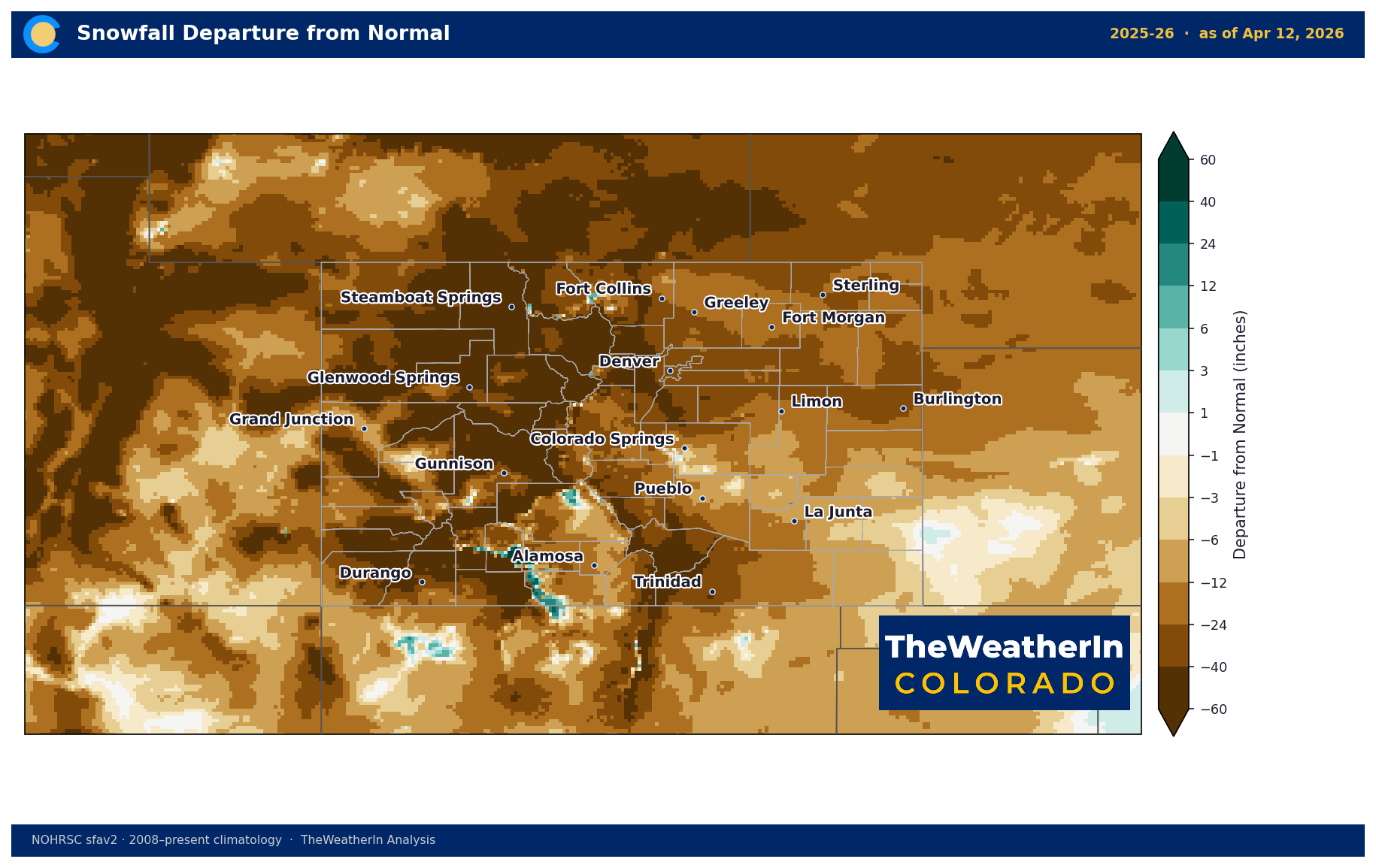
The result was a statewide snowfall deficit that, for many locations, ranks among the 3–5 worst on record in the NOHRSC dataset going back to 2008.
Implications for Next Season
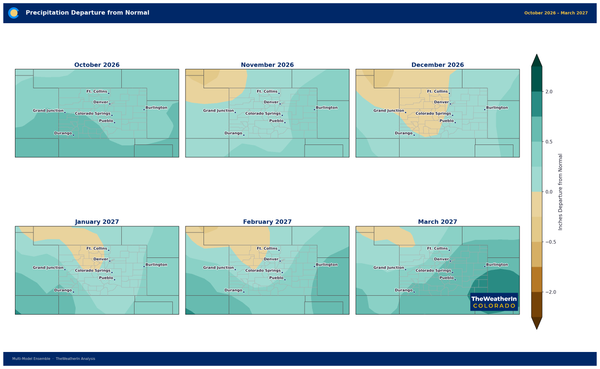
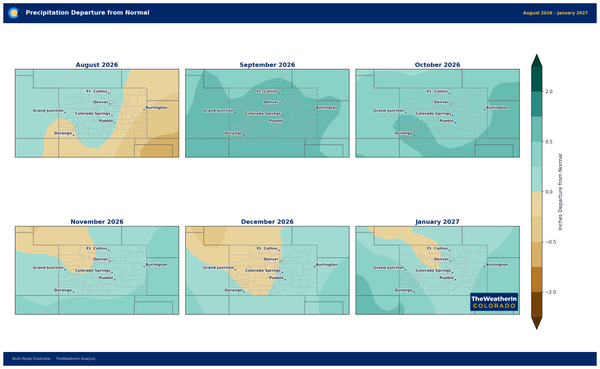
A poor snowpack season has no direct bearing on the following winter — Colorado's mountain snowfall is driven by large-scale atmospheric patterns that reset each fall. However, the warm spring outlook means any remaining snowpack
will melt quickly, affecting summer trail and high-country conditions well into July.
For next season, monitoring the ENSO state heading into fall will be the primary long-range signal to watch.