Spring 2026 Planting Outlook for Colorado
A warm, dry April sets up an unusual spring for Colorado's agricultural producers — favorable for early planting but concerning for soil moisture going into summer.


Temperature: Running Ahead of Schedule
The dominant signal for spring 2026 is warmth — April is running 3 to 9°F above normal across the eastern plains and Front Range, and the seasonal outlook keeps that warmth in place through May and June.
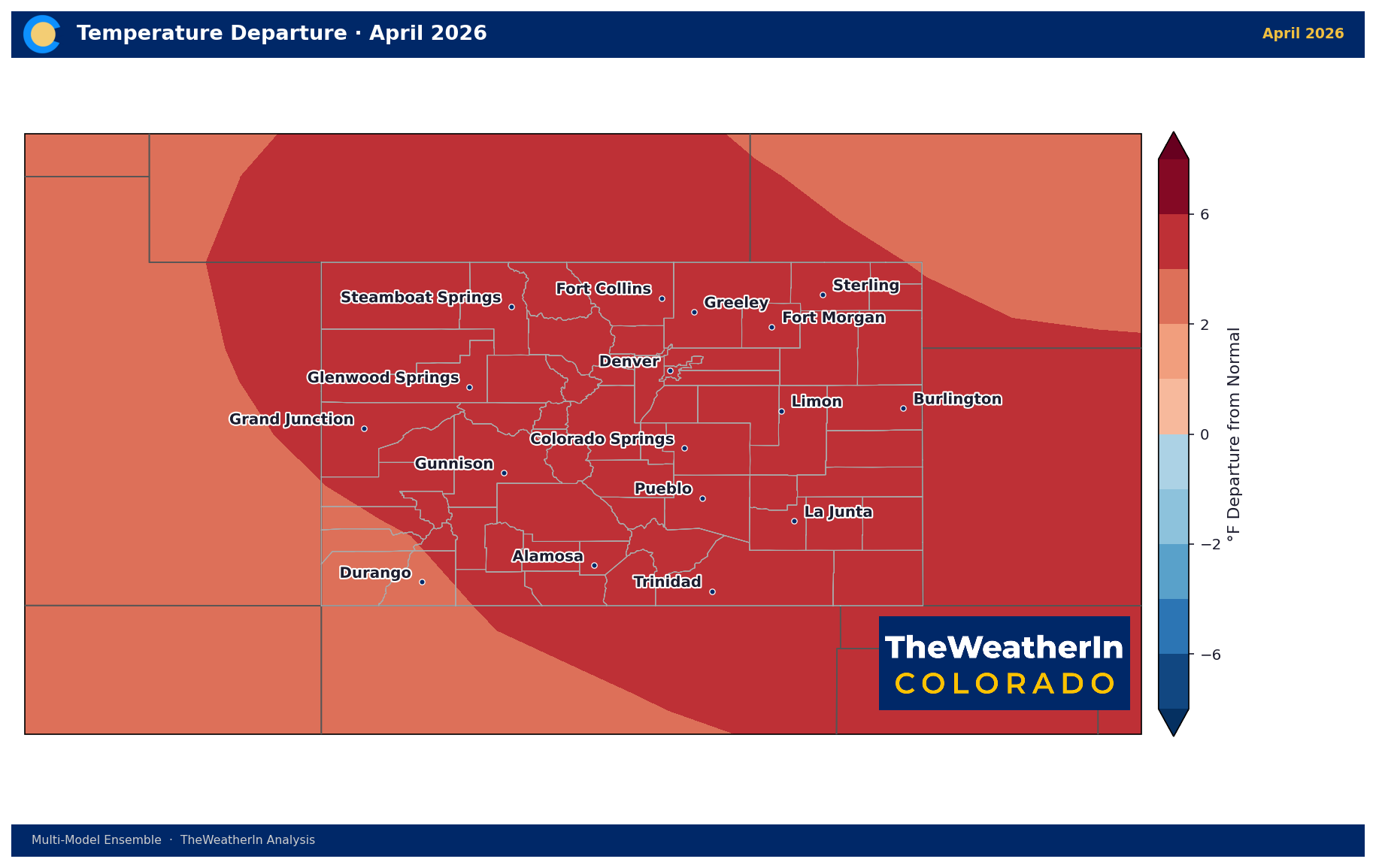
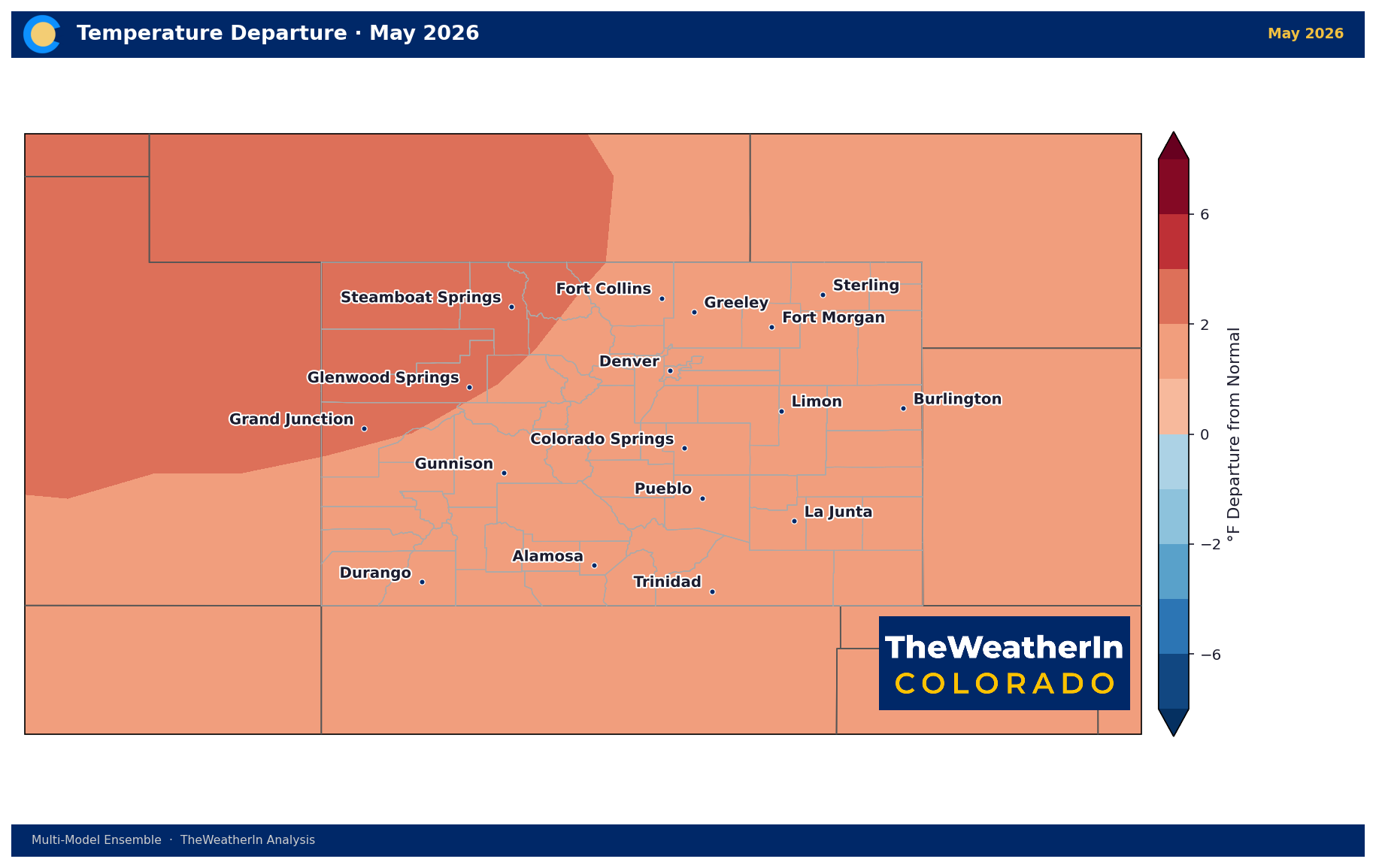
For producers, this means degree-day accumulation is running 1–3 weeks ahead of schedule across the plains. Corn planting conditions on the eastern plains arrived earlier than normal. Cool-season crops (wheat, barley, alfalfa
first cutting) are advancing faster than average.
The flip side: the risk of late frost has not disappeared. A warm April mean does not preclude a hard freeze event in the last two weeks of April or early May. Monitor short-range forecasts closely through May 10.
Soil Moisture and Precipitation: The Concern
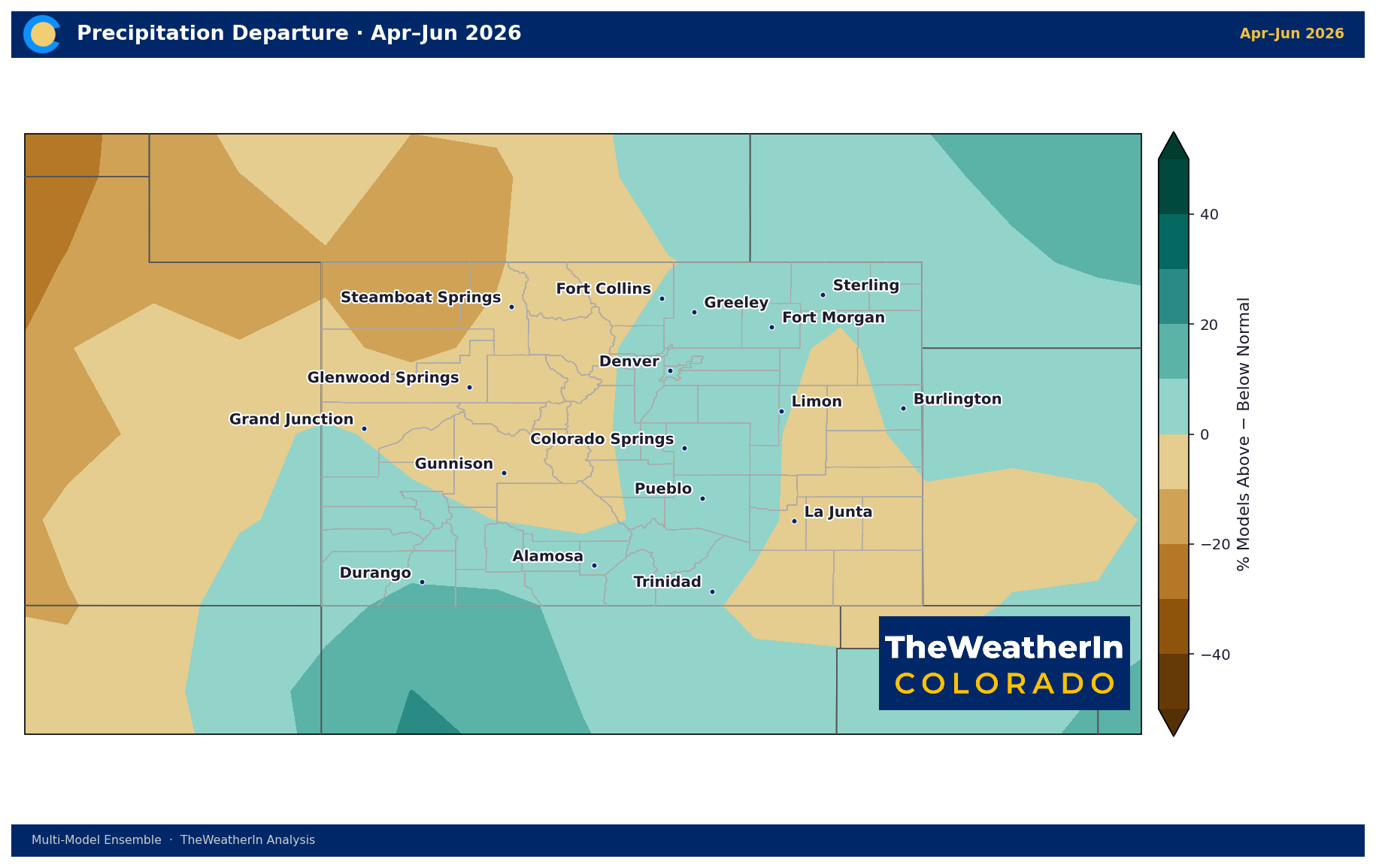
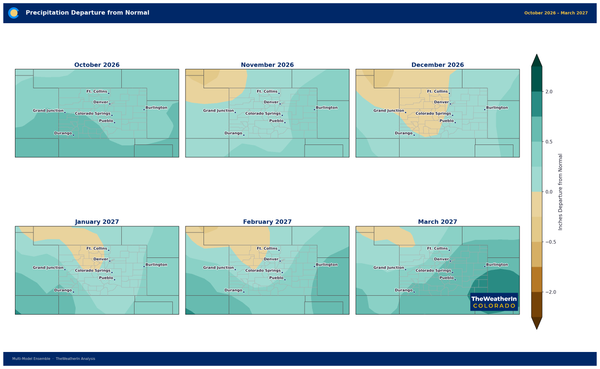
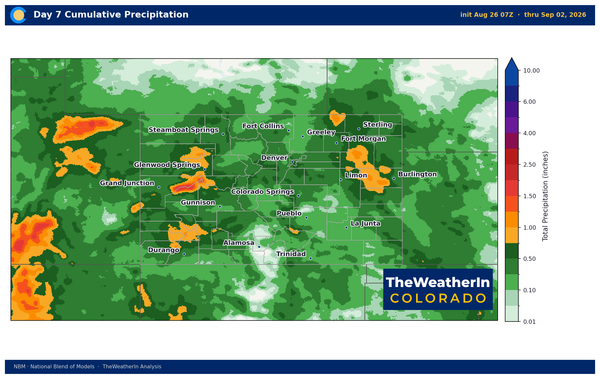
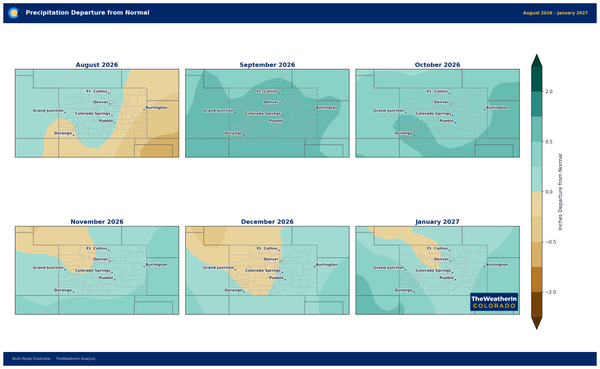
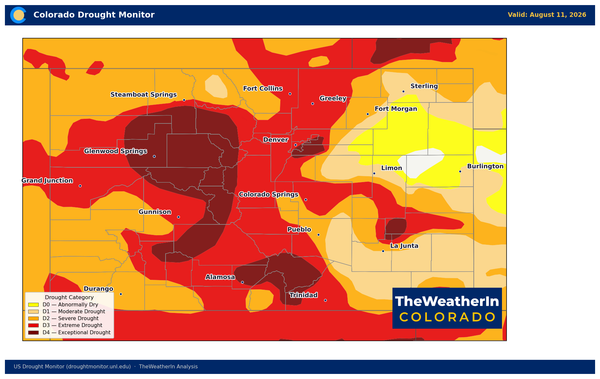
The April–June precipitation outlook shows a dry lean across the eastern plains — more models favor below-normal precipitation than above. Combined with an already-warm start to the month, soil moisture on the eastern plains is likely drawing down faster than normal.
For dryland operations, this is the highest-risk part of the outlook. Crops in the ground are competing for limited soil moisture during a warm, potentially dry spring. The seasonal outlook does improve for May–July in the mountains
and Front Range foothills, but the relief comes later than ideal for eastern plains producers.
Frost-Free Season
With above-normal temperatures likely through at least June, the frost-free window is expected to open 1–3 weeks earlier than historical averages across most of Colorado's agricultural valleys. The San Luis Valley — normally one of the last regions to clear frost risk — may see the freeze window close earlier than typical, offering a longer growing window for potatoes and grain crops.
Bottom Line for Producers
- Eastern plains dryland: Warm, potentially dry — monitor soil moisture carefully through May; planting timing is favorable but moisture stress risk is elevated
- Irrigated operations: Water supply concerns (see separate snowpack analysis) — early-season warm temperatures will increase evapotranspiration demand earlier than normal
- San Luis Valley: An earlier-than-normal frost-free window is favorable for season length
- Mountains / western slope: Warm spring accelerates growth but also accelerates water demand from already-depleted
snowpack