Spring and Summer Outdoor Outlook 2026 — Colorado
A warm spring means early high-country access, but rapid snowmelt and fire weather concerns will shape the outdoor season. Here's what to expect through summer.


Trail and Pass Access: Earlier Than Normal
The temperature outlook through May and June is consistently above normal statewide — departures of +3 to +6°F are favored through the spring months.
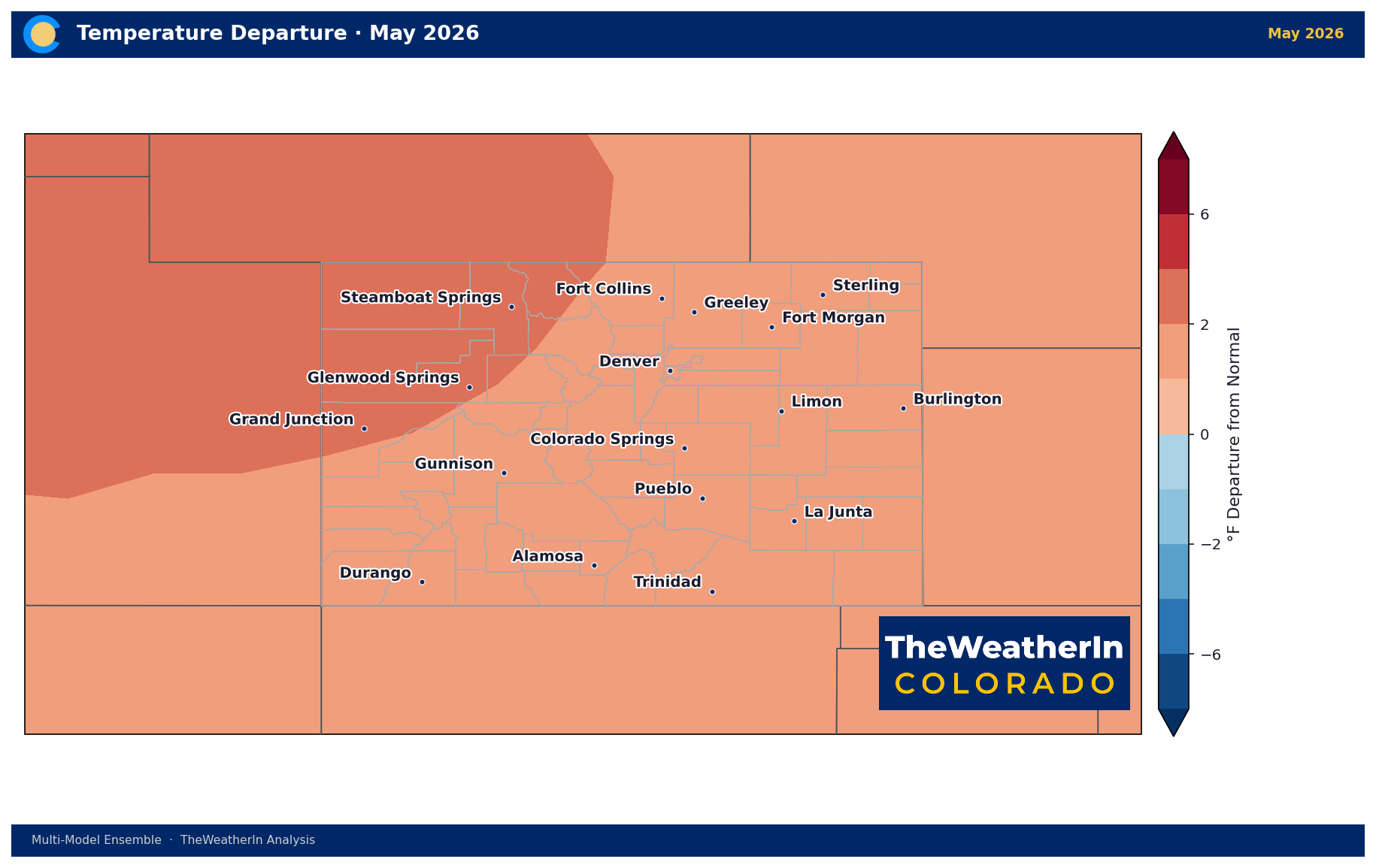
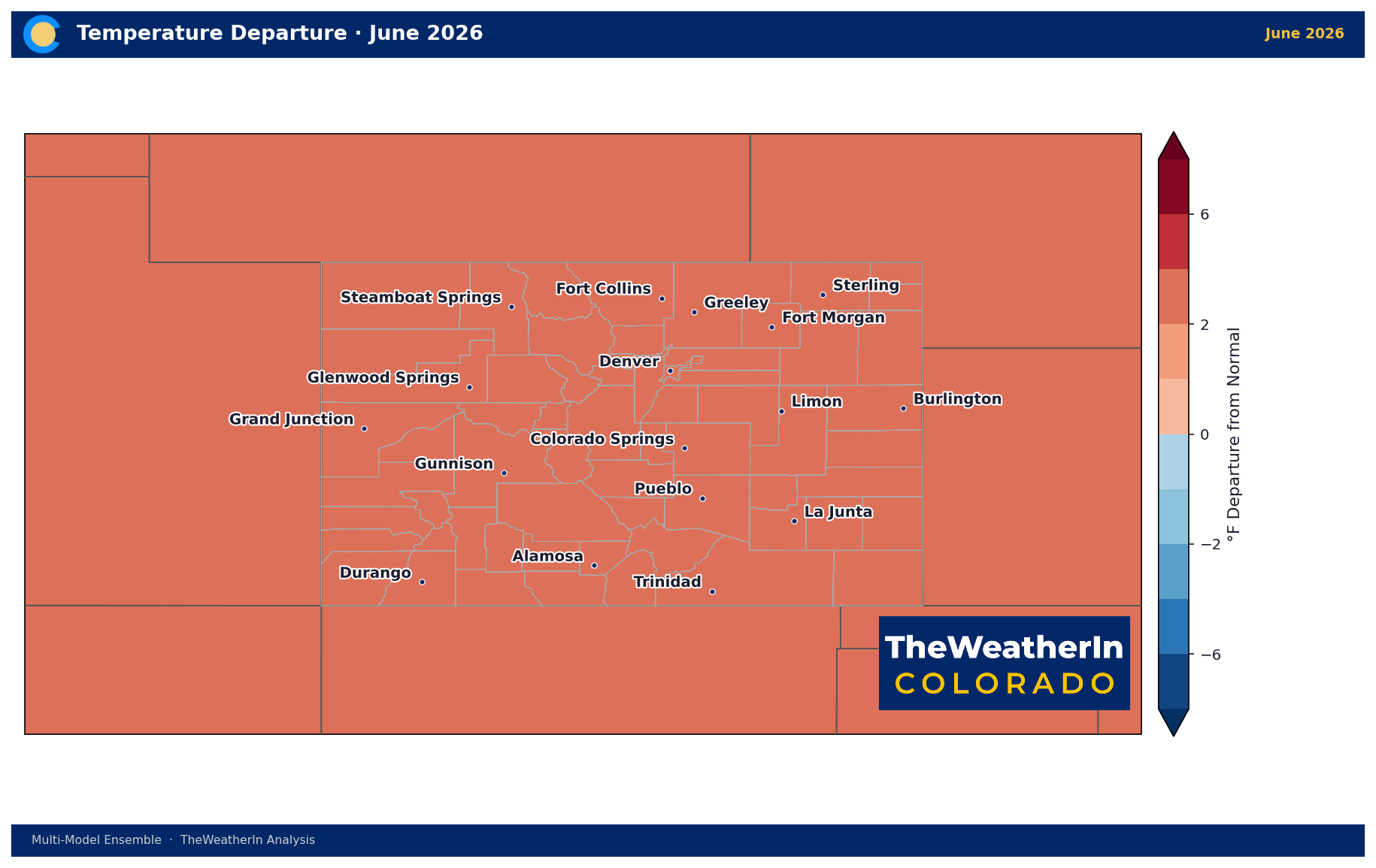
Combined with a below-normal snowpack, this means high-country roads and trails will likely clear 2–4 weeks earlier than their historical average dates. Rocky Mountain National Park's Trail Ridge Road, typically opening in late May,
could open in early May. Many popular 14er approaches and wilderness trails at 11,000–12,000 feet will be snow-free earlier than usual.
Streamflows and Fishing
Early, rapid snowmelt means rivers and streams will run high and turbid earlier than normal. Peak runoff on most front-range and western slope drainages is likely in April and May rather than May and June. By mid-June, many rivers
that are typically in peak runoff will already be dropping toward summer baseflow.
For anglers: the early-season runoff window will be compressed. High, muddy water conditions will arrive and clear sooner. By late June, conditions that normally don't occur until late July — low, clear, warm water — may already be
in place on lower-elevation streams.
Summer Thunderstorm Season
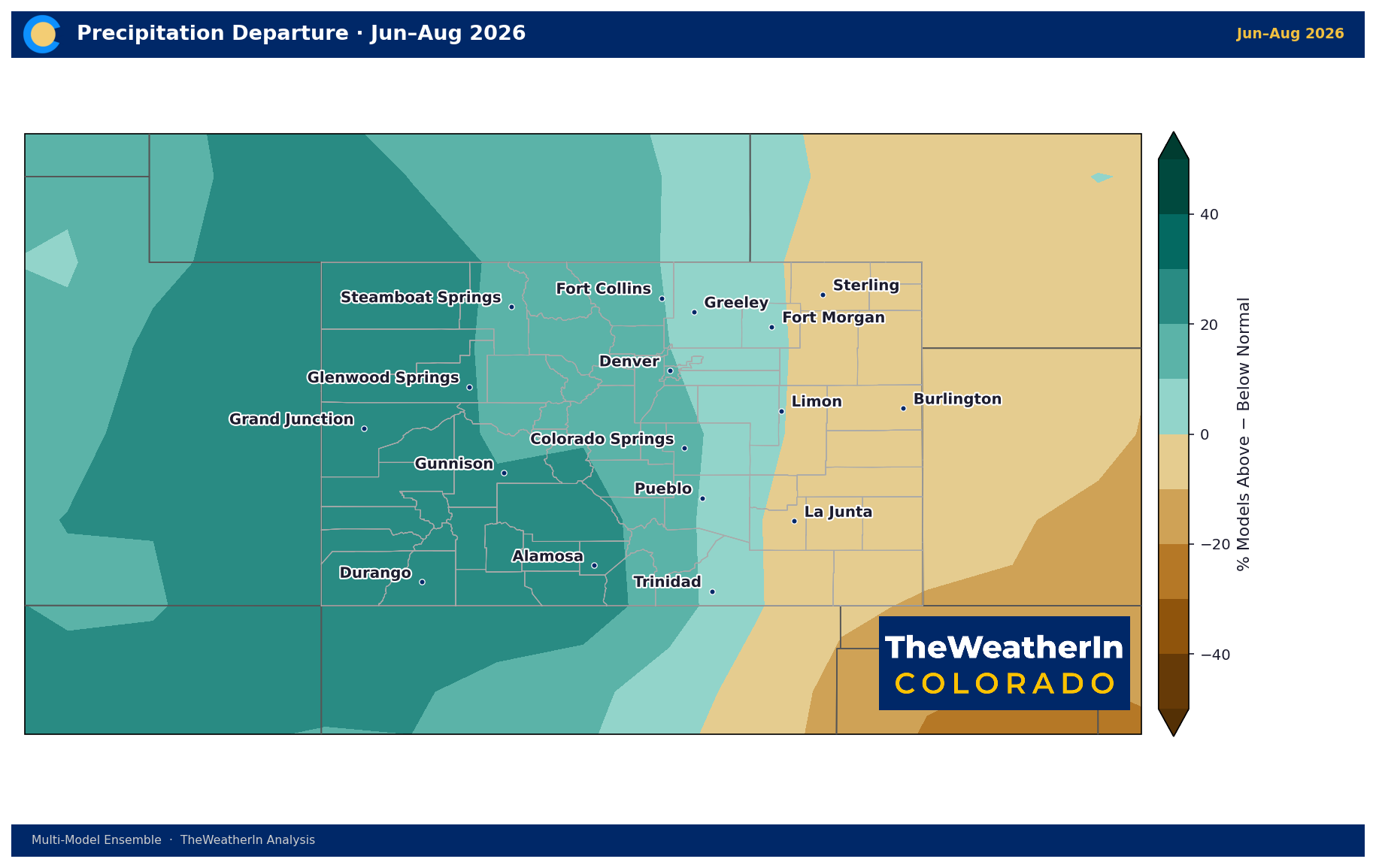
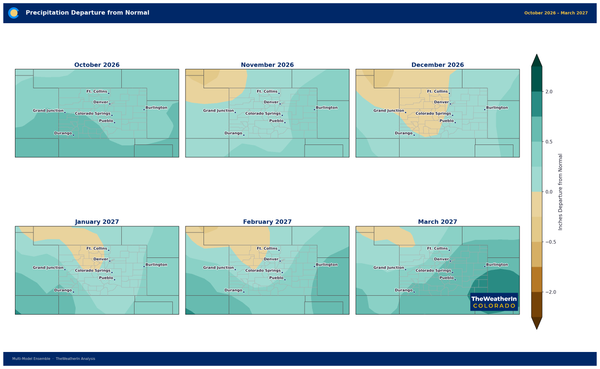
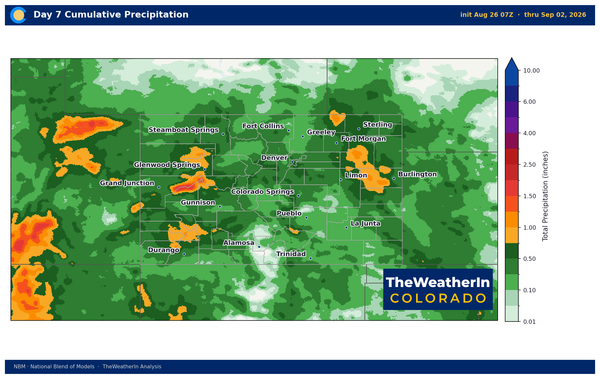
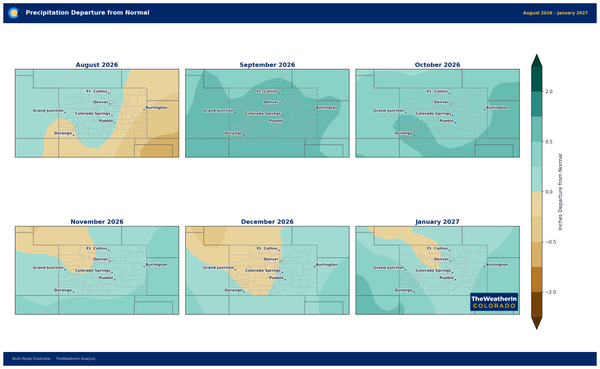
The June–August precipitation outlook leans wet for the mountains and western slope — a signal consistent with an active early monsoon. If this verifies, summer afternoon thunderstorm activity could be above normal, particularly across the San Juans, Elk Mountains, and Sawatch.
For hikers and backcountry users: an active monsoon is generally positive for wildfire suppression and trail conditions, but it also means above-normal lightning exposure above treeline. Standard early-descent protocols apply — aim to be below 12,000 feet before noon on unsettled days.
Fire Weather
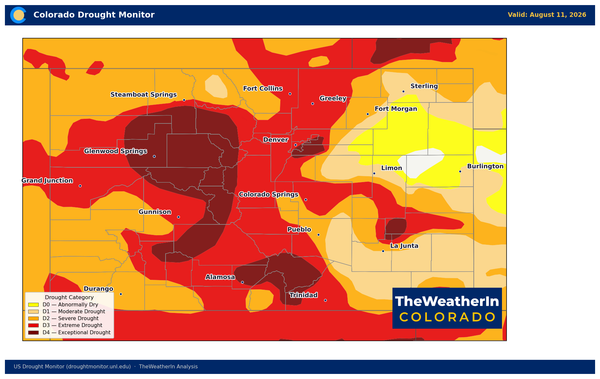
The warm, dry April–May signal is the most concerning part of the outdoor outlook for fire risk. Below-normal snowpack means fuels at lower elevations are drying out weeks ahead of schedule. The eastern plains and southern Colorado foothills carry the highest early-season fire risk.
The improving monsoon signal for June–August is encouraging — if moisture arrives on schedule, fire risk should moderate significantly by midsummer.
Bottom Line by Activity
- Hiking/climbing: High-country access earlier than normal — adjust plans accordingly
- Mountain biking: Trail drying will be weeks ahead of schedule at mid-elevations
- Fishing: Compressed early runoff window — good early access, but plan for warm low-water conditions by late June
- Skiing: Season is effectively over statewide (Wolf Creek excepted); spring skiing window is past
- Camping: Fire restrictions likely earlier than normal — check current restrictions before heading out