Colorado's Drought Gets Worse, Not Better, Heading Into Peak Summer
The latest Drought Monitor shows extreme and exceptional drought expanding again across Colorado this week. Here's where things stand — and why the real chance at relief is still months away.

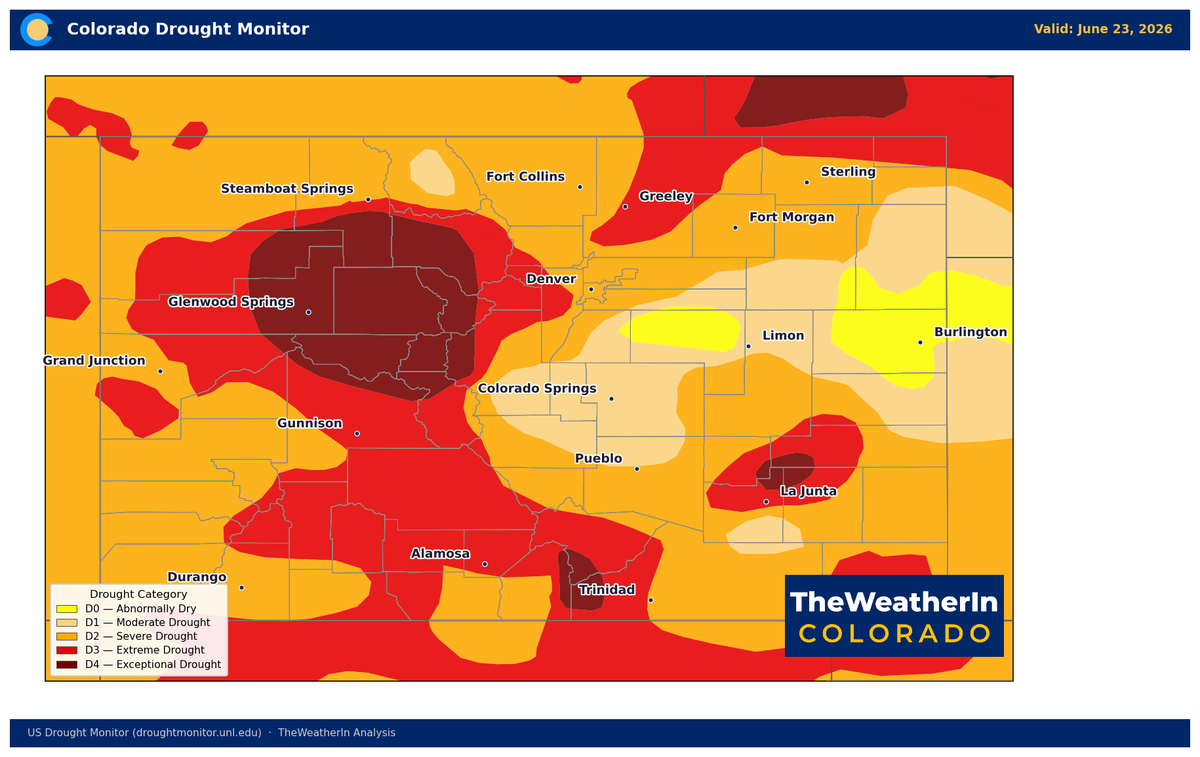
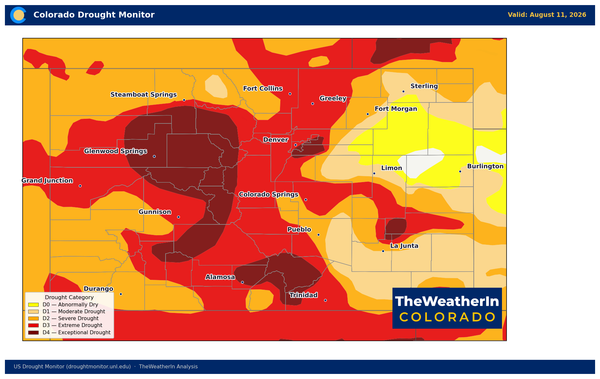
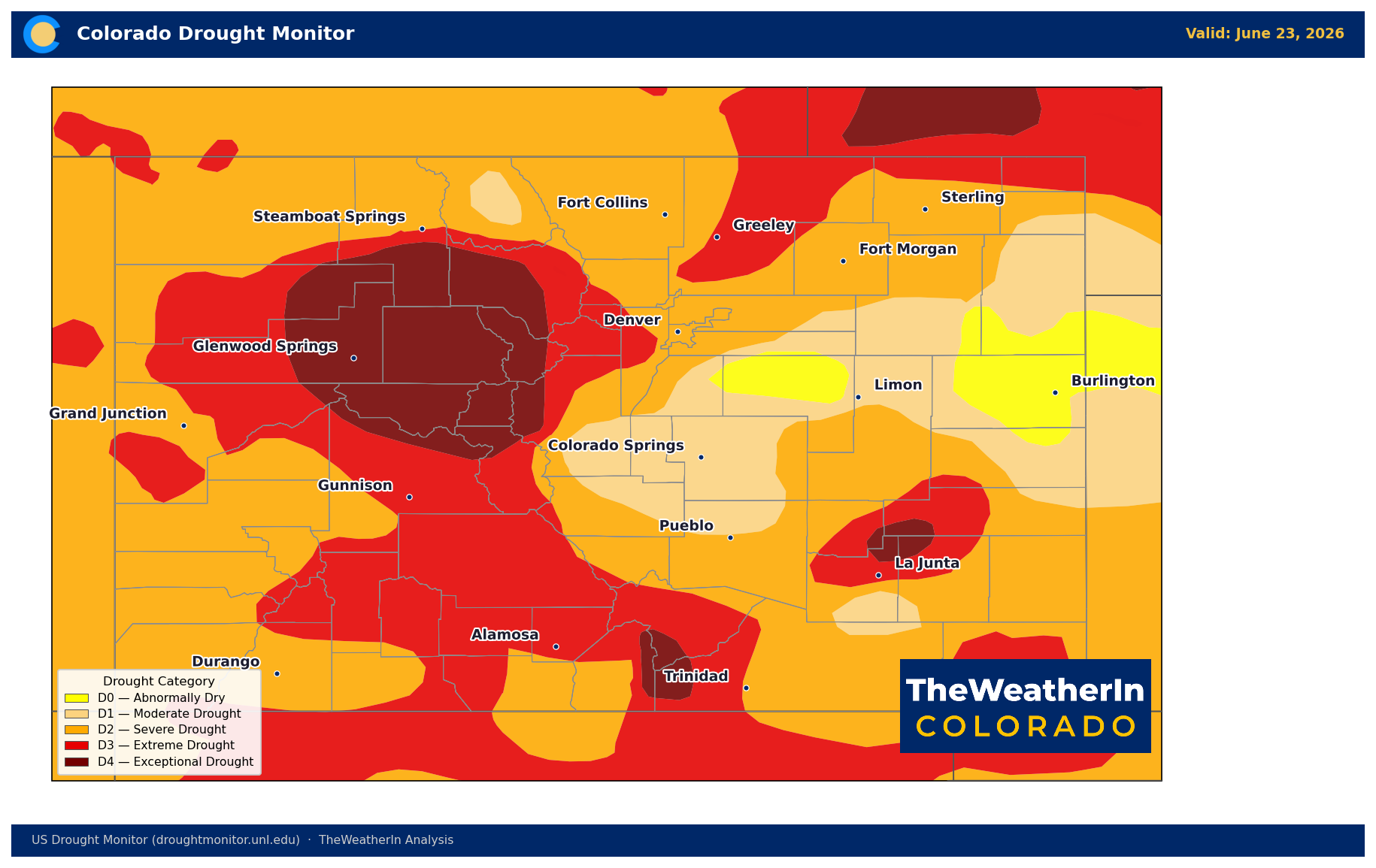
The U.S. Drought Monitor released Thursday shows Colorado's drought tightening its grip rather than loosening it. Every category of the most severe drought expanded again this week, and the state has now sat at 100% drought coverage for months with no sign of that changing.
This Week's Numbers
All of Colorado — 100% of the state — remains in drought (D0–D4). That hasn't been the headline in a while; the real story is what's happening inside that number. Extreme to exceptional drought (D3–D4) now covers 37.94% of the state, up from 34.62% last week. Exceptional drought (D4), the worst category on the scale, expanded to 9.34% from 8.94%. The Drought Severity and Coverage Index — a single number that tracks overall drought intensity statewide — climbed to 329, up from 320 last week and more than double where it stood at the start of the year (127).
| Category | This Week (6/23) | Last Week (6/16) | One Year Ago |
|---|---|---|---|
| Any drought (D0–D4) | 100% | 100% | 59.57% |
| Extreme to exceptional (D3–D4) | 37.94% | 34.62% | 5.39% |
| Exceptional (D4) | 9.34% | 8.94% | 0% |
| Drought Severity & Coverage Index | 329 | 320 | 133 |
Why It Keeps Getting Worse
This week's expansion is a continuation of the same story that has defined 2026: a snowpack that never accumulated, followed by a hot, dry summer pattern that keeps drawing down what little soil and stream moisture remains. Statewide May–July runoff is forecast at just 24% of the historical median, and reservoirs are running on carryover from 2025 with no meaningful replenishment coming from the mountains. There's no quick precipitation event that fixes a deficit this deep — the soil and stream moisture lost over the past year doesn't come back in a week or two of rain.
The same dryness is also the engine behind this summer's fire weather. Fuels across the eastern plains, San Luis Valley, and southern mountains cured weeks ahead of schedule, and critical fire weather days keep recurring as the pattern cycles through warm, windy, low-humidity setups.
What Could Actually Change This
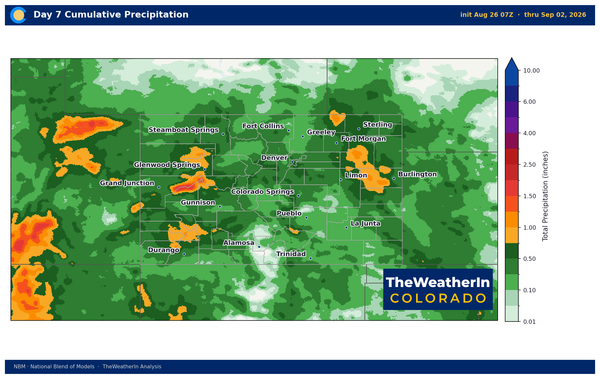
The summer monsoon is Colorado's best near-term hope — but it typically doesn't reach southern Colorado until mid-July, and its reach north of the Arkansas River is unreliable even in a good year. Even an on-time, healthy monsoon would bring localized relief, not a statewide reset.
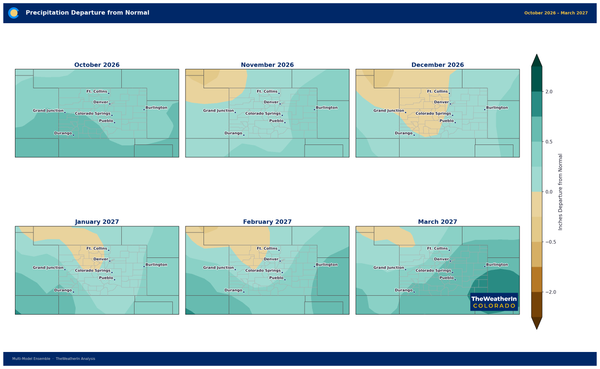
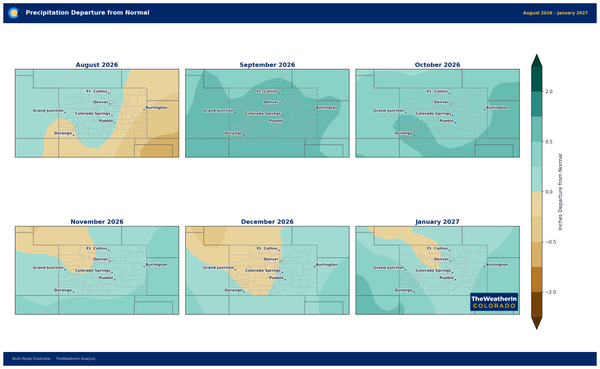
The bigger pattern shift worth watching is El Niño, now confirmed in the tropical Pacific and favored to strengthen into a strong-to-very-strong event by winter. Moderate-to-strong El Niño winters historically deliver above-normal precipitation to the southern Rockies — a real signal for eventual drought relief. But that's a November-through-March story, not a July one. Anyone hoping this week's drought numbers turn around because of El Niño is looking at the wrong season.
For the fuller picture of how that pattern shift fits into the months ahead, the Colorado Summer Outlook 2026 article breaks down what El Niño means for temperature and monsoon timing through the rest of summer — worth a read alongside this update.
Agricultural Implications
- Irrigation water remains severely limited statewide. Streamflow at many forecast points is tracking toward record or near-record lows for the season — plan water use assuming no improvement through the growing season.
- Forage and pasture stress continues for dryland and range operations, particularly across the eastern plains and San Luis Valley, where soil moisture deficits built up over the winter and spring have not been erased.
- Fire risk to grazing land and infrastructure stays elevated on any day with low humidity and gusty winds — this week's drought expansion is a reminder the fuel complex isn't recovering on its own.
The Signal Worth Watching
Until the monsoon establishes itself in mid-July, expect Colorado's drought numbers to hold steady or worsen — real relief is a winter story tied to El Niño, not a summer one.